Skip to content
GGIL

Colour sand

Products

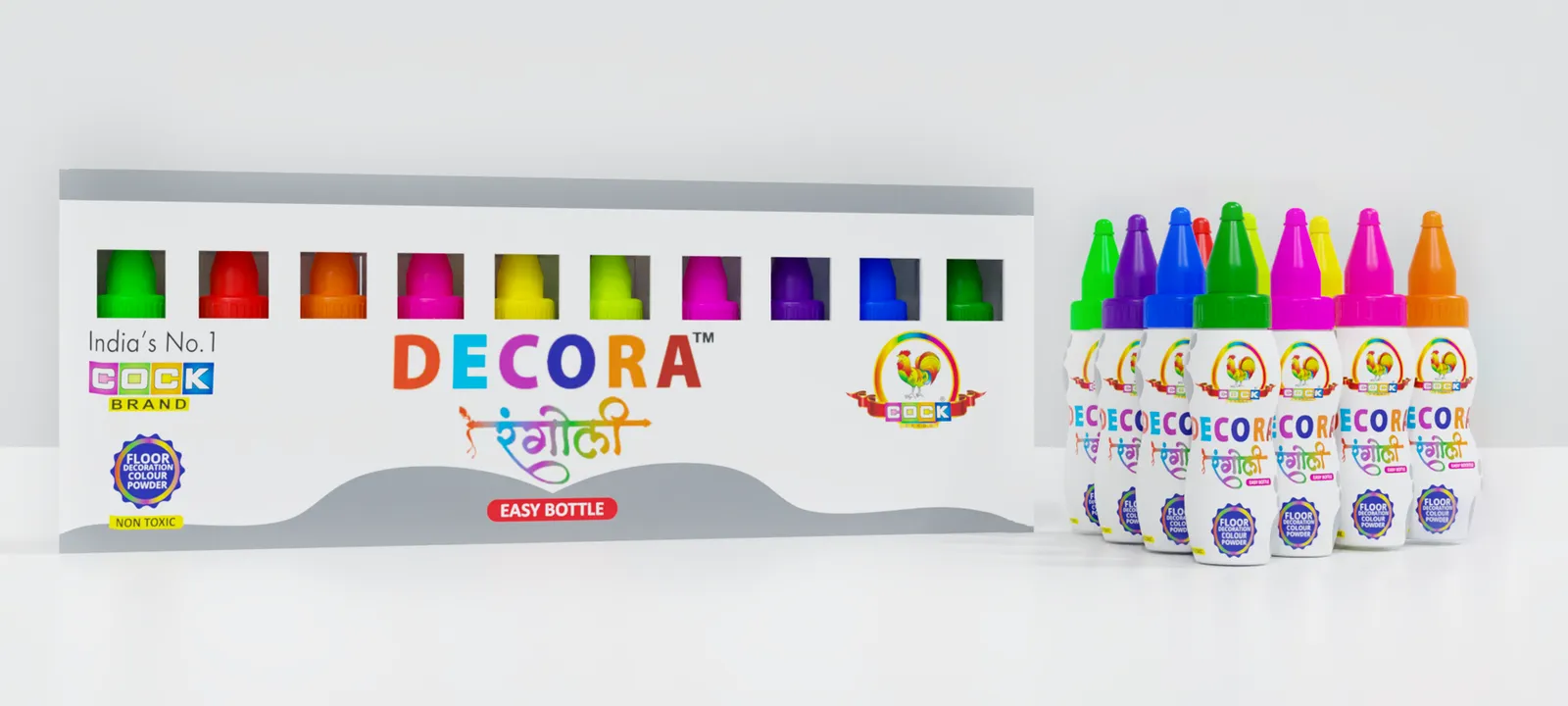
Decorative rangoli powder in easy-pour bottles and loose pack, sold under the Decora line.

Colour sand is decorative powder for rangoli — the floor art made at the threshold of a house during Indian festivals. It is sold loose and in easy-pour bottles under the Decora line, and it is the quietest product in the range: nobody throws it, and it is made to sit still and hold its colour on a floor for days.

Outside rangoli, the same product is craft material. Layered sand jars, school art, table decoration, florists' glasswork and event floor work all use it, and that trade is steadier through the year than the festival peak.

Modelling sand — the mouldable clay-sand grade children pack and cut rather than pour — runs off the same colouring capability. It is quoted per enquiry rather than carried as a listed line.

Where it is used

Colour sand beyond the obvious occasion

  • Rangoli

    Floor patterns at the entrance of a home during Diwali and other festivals, made freehand or over a stencil.

  • Craft and schools

    Sand art, layered bottles and classroom activity, where washability and non-toxicity matter more than saturation.

  • Event floor work

    Entrance pieces and stage floors for weddings and functions, laid the night before and expected to hold.

  • Vase and terrarium layering

    Banded colour in glass — vases, jars, terrariums and candle holders. Florists and gift assemblers buy this by shade rather than by pack, and repeat through the year rather than at Diwali.

  • Pooja thali and temple floor

    Thali decoration, mandala work and temple floor patterns, where the colour has to sit undisturbed through a ceremony and sweep up cleanly afterwards.

  • Display and visual merchandising

    Window dressing, product plinths and exhibition floors. A saturated colour that holds an edge photographs well and can be laid and lifted without paint or adhesive.

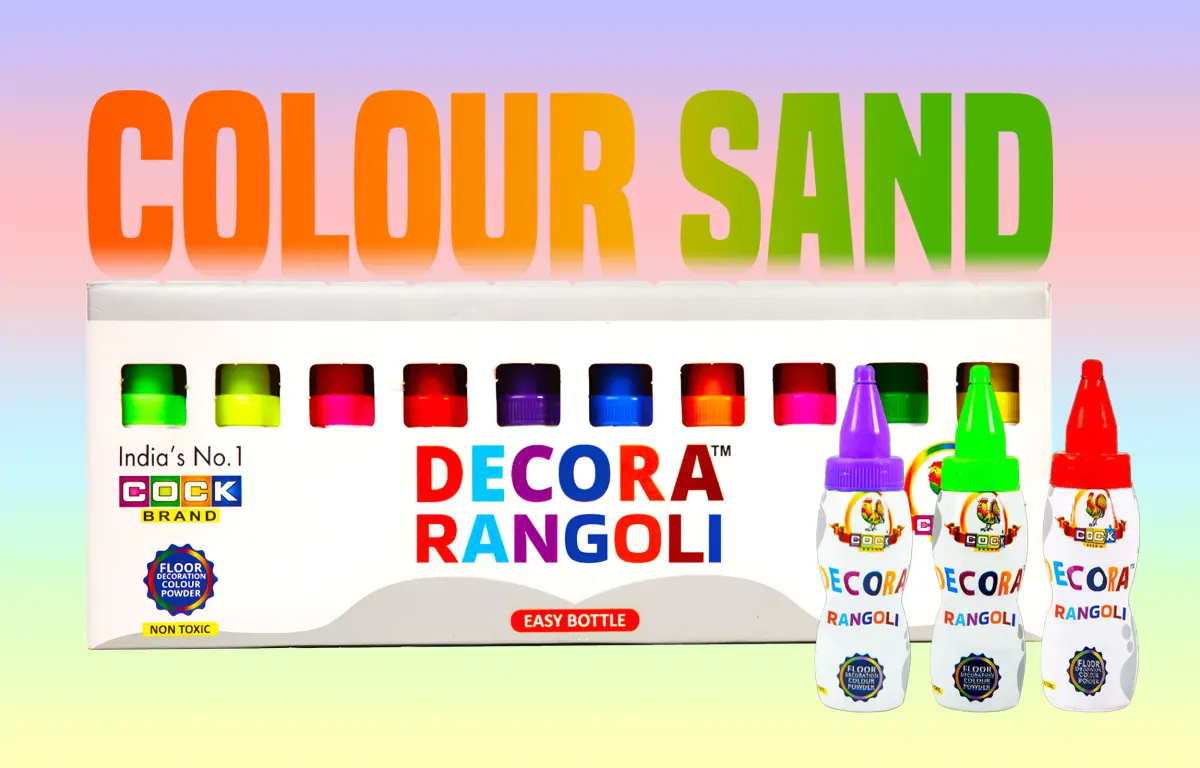
  • A row of Decora rangoli colours in easy-pour bottles
    The easy-pour bottle: the retail format, and the one the dealer network moves.
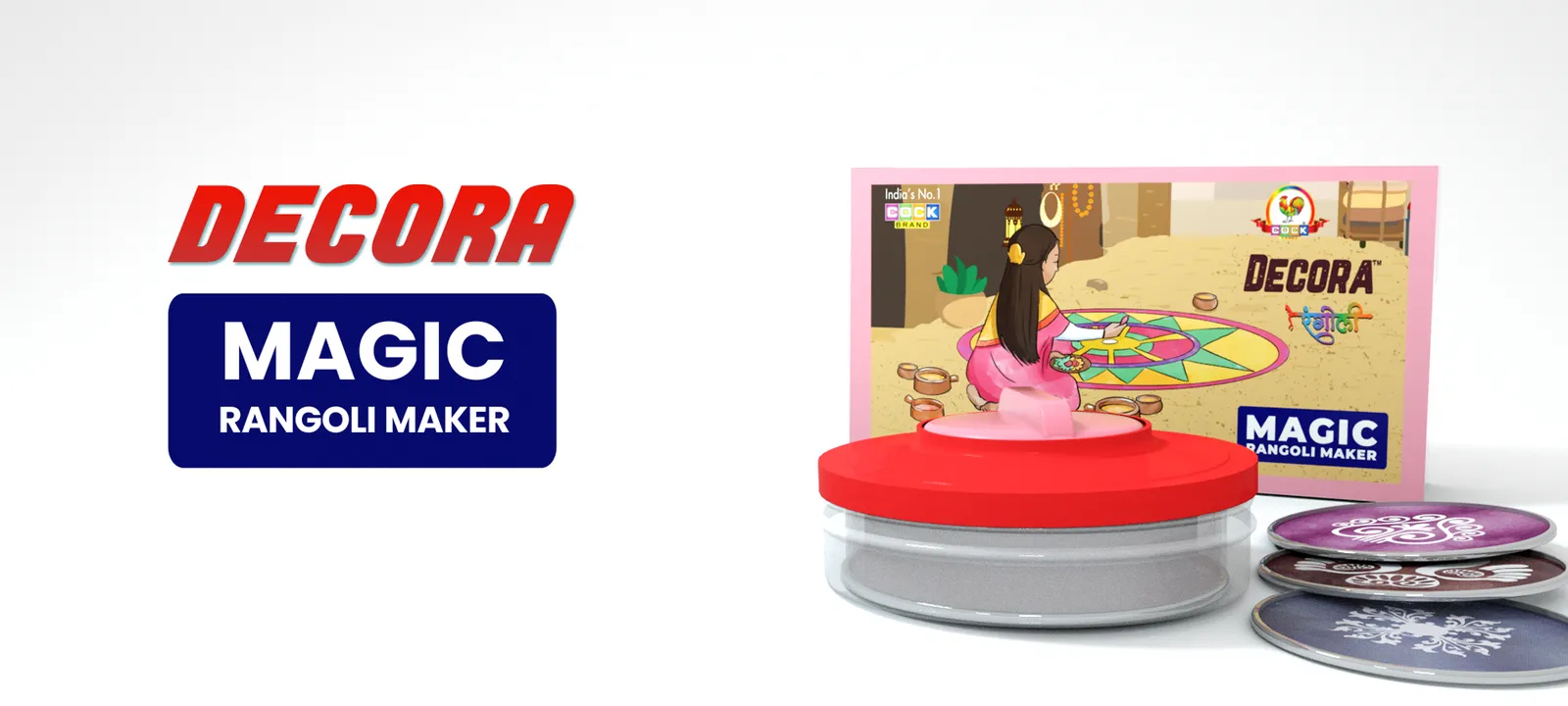
  • The Decora Magic rangoli maker with stencil discs
    Stencil discs, for a repeatable pattern without a freehand grid of dots.
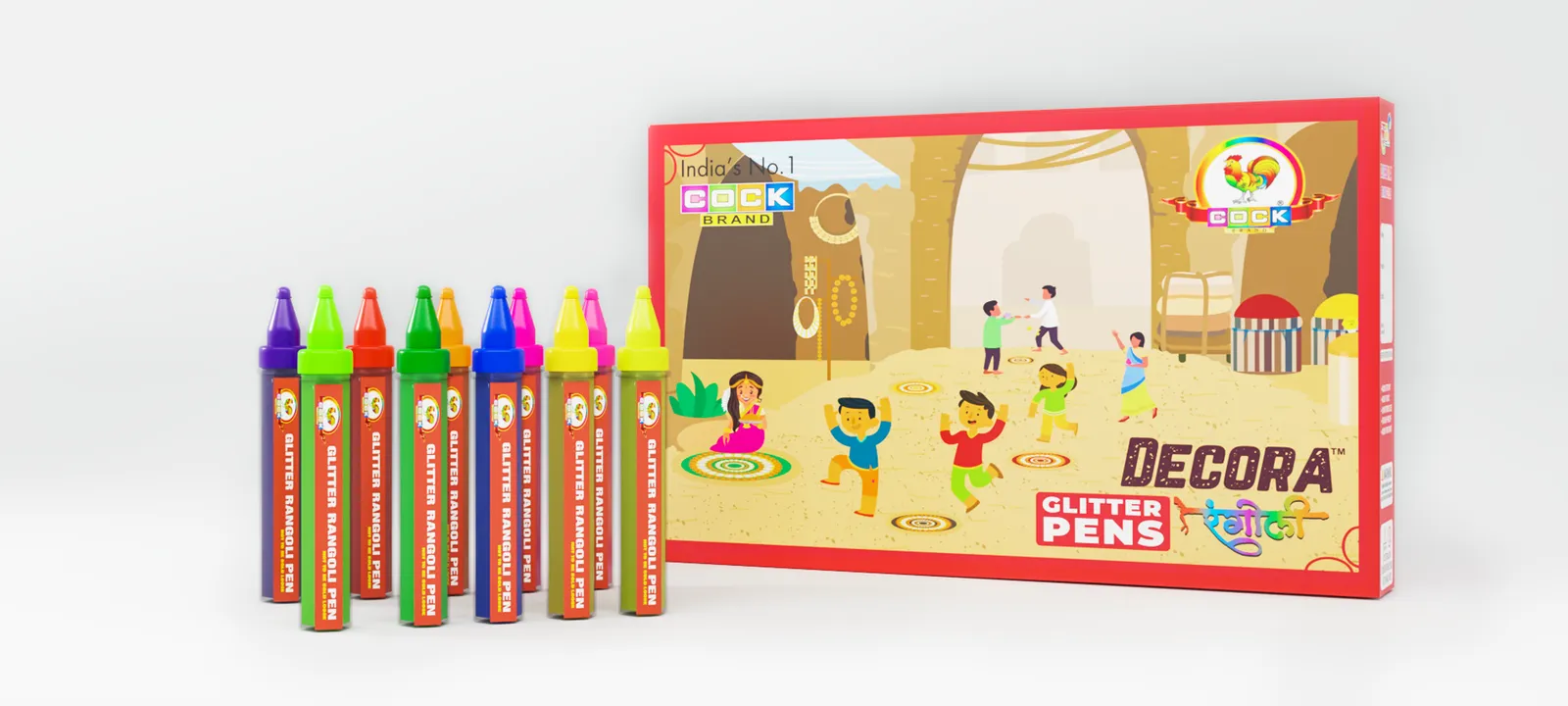
  • Decora rangoli colour pens in a retail pack
    Colour pens, which put the same pigment in a child's hand.

What rangoli is

Rangoli is a pattern made on the floor, traditionally at the doorway, as a welcome and as an auspicious mark during festivals. It is most associated with Diwali but is made at weddings, at Onam and Pongal under other names, and on ordinary mornings in many households.

The patterns are geometric, floral, or figurative, worked freehand from a grid of dots or laid over a stencil. Material varies by region and occasion — rice flour, flower petals, coloured powder — and coloured sand is the version that holds a sharp edge and a strong colour for longest.
Why grain and fastness matter here

A rangoli powder has almost the opposite requirement to a Holi colour. Gulal has to leave; rangoli has to stay. The grain has to pour in a controlled line from a pinched hand or a bottle nozzle without running, and the colour has to survive a day of foot traffic and evening damp without going muddy at the edges where two colours meet.

That is a milling and a pigment problem rather than a formulation one, and it is why this is a separate line rather than dyed gulal in a different pack.

Decora colour sand for rangoli in easy-pour bottles
Colour sandRangoli sand, in easy-pour bottles.

Before you order

What is worth settling early

Format
Sold loose and in easy-pour bottles. The bottle is the retail format and the one that moves through the dealer network; loose is what event and craft buyers usually want.
Not for skin
This is a decorative floor product, not a play colour. It is not formulated to be thrown or worn, and should not be substituted for gulal.
Specifications
Shade range, grain, bottle sizes and carton configuration are issued per quotation against current production.

Before you ask

Questions about colour sand

What is rangoli powder made of?

Rangoli is made from several materials depending on region and occasion — rice flour, flower petals, or coloured powder. Coloured sand is the version that holds a sharp edge and strong colour longest, which is why it is the common choice for patterns meant to last more than a few hours. The requirement is close to the opposite of a Holi colour: gulal is formulated to wash away, while rangoli powder has to pour in a controlled line and survive a day of foot traffic without going muddy where two colours meet.

Can rangoli colour be used for Holi?

No, and the two should not be substituted for each other. Colour sand is a decorative floor product, milled and pigmented to stay put and hold a defined edge. Gulal is milled on a corn-starch base specifically so that it clears from skin and fabric. Using a floor product as a play colour means using something never formulated to be worn, which is the wrong way round on both performance and sense.

Children playing Holi with Cock Colours gulal, colour on their faces

Cock Colours

The gulal most of India grew up with.